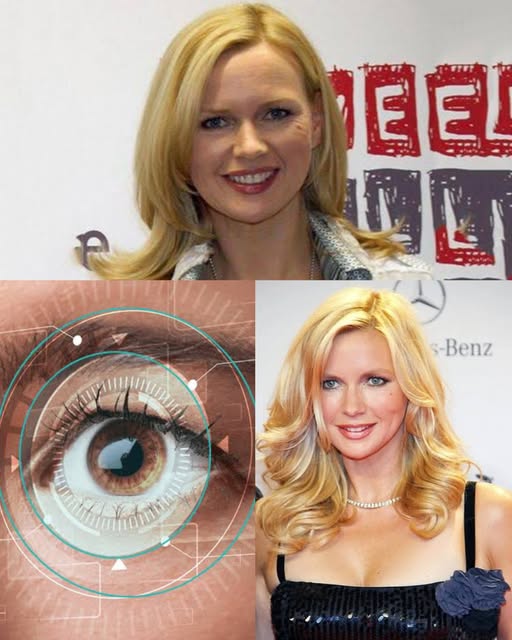
Veronica Seider was a woman from Germany who became known around the world for her exceptional eyesight — a level of vision far beyond what most humans experience. Born in 1951, her remarkable eyes drew scientific attention when she was a student in West Germany. In the early 1970s, she was reportedly recognized in the Guinness World Records for possessing what was described as one of the sharpest human visions ever recorded.
Most people measure vision using the Snellen scale, where 20/20 is considered normal. Veronica’s vision was described as 20/2, meaning what a typical person could only see clearly from two feet away, she could discern from 20 feet — and even farther under real-world conditions.
Veronica’s Exceptional Vision Explained
What set Veronica Seider apart was not just “good eyesight,” but what many described as superhuman visual acuity. According to various reports, she could identify objects and even recognize people from distances of more than 1.6 kilometers (1 mile) — a feat that ordinary human vision cannot achieve.
While most people struggle to see fine detail at half that length, Veronica’s sight allowed her to capture intricate information at distances that seemed almost impossible. This phenomenon led observers to liken her eyes to high-powered optical equipment rather than natural human vision.
Also Read: Who Inherited Ginger Rogers’ Estate? What Happened After the Hollywood Legend’s Passing
How Was Her Vision Measured?
The story of Veronica’s acuity began in a scientific setting at the University of Stuttgart in Germany, where tests reportedly confirmed that her sight far exceeded average human limits. Her abilities were said to be 20 times better than typical vision — a level that drew not only scientific curiosity but also public fascination.
In comparison, most people with normal vision can read standard eye chart letters without difficulty at 20 feet. Someone with 20/10 vision — considered excellent — can read at 20 feet what a normal person reads at 10 feet. Veronica’s described 20/2 vision would theoretically allow her to see extremely fine detail at long distances, although exact scientific replication of such measurements remains limited.
The Science Behind Vision
Human vision depends on specialized cells in the retina called cones, which detect light and help us perceive fine detail and color. The more densely packed these cones are, the sharper the potential visual resolution. Exceptional vision can sometimes be explained by variations in cone density or how the brain interprets visual signals.
However, the level of vision described in Veronica’s case pushes the limits of what is biologically documented in humans. While genetics and unique ocular structure might increase visual clarity, a full scientific explanation for her exact ability does not yet exist in published peer-review studies.
Also Read: What We Know (— and What We Don’t) About Wayde King’s Illness
Myth vs. Reality — What Science Says
Because extraordinary claims often attract skepticism, some scientists have noted that without modern testing standards, reports of Veronica’s 20-times-better vision should be approached with caution. While her capability is widely repeated online and referenced by record-keeping sources, rigorous clinical documentation from contemporary ophthalmology isn’t publicly available.
This does not mean her story is dismissed outright, but it does highlight the difference between impressive anecdotal or historical reports and verified scientific data. Still, the fascination with exceptional vision continues to draw attention from biologists, eye specialists, and curious readers worldwide.
Also Read: Are Kris Jenner and Corey Gamble Still Together? A Complete Relationship Update
What Veronica’s Story Teaches Us?
Veronica Seider’s legacy isn’t just about raw ability — it’s a reminder of human biological diversity and curiosity about what the body can do. Even though exact measurements and explanations vary by source, her story remains one of the most intriguing examples of extraordinary sensory potential that has ever been widely shared.
Stories like hers expand discussions about human limits and inspire ongoing interest in vision science and genetics. Whether seen as an inspiring anomaly, a fascinating record, or a subject for scientific exploration, Veronica Seider continues to captivate imaginations around the globe.
FAQ
Q1. Who was Veronica Seider?
Veronica Seider was a German woman born in 1951 who became famous for having extraordinarily sharp eyesight and is often noted in discussions about world vision records.
Q2. What was so special about her vision?
Her eyesight was reported to be around 20 times better than average, allowing her to identify individuals over a mile away — far beyond the reach of normal human vision.
Q3. Was her vision scientifically proven?
Her abilities were documented historically and referenced in record collections like Guinness World Records, but modern scientific replication with today’s tools is limited.
Q4. Is such vision possible biologically?
Exceptional visual ability can exist due to genetic or physiological variations, but the extreme levels described in Veronica’s case are rare and not widely studied.
Q5. Why is her story still famous?
Veronica’s story fascinates because it challenges common assumptions about human visual limits and shows how extraordinary abilities can capture public attention.